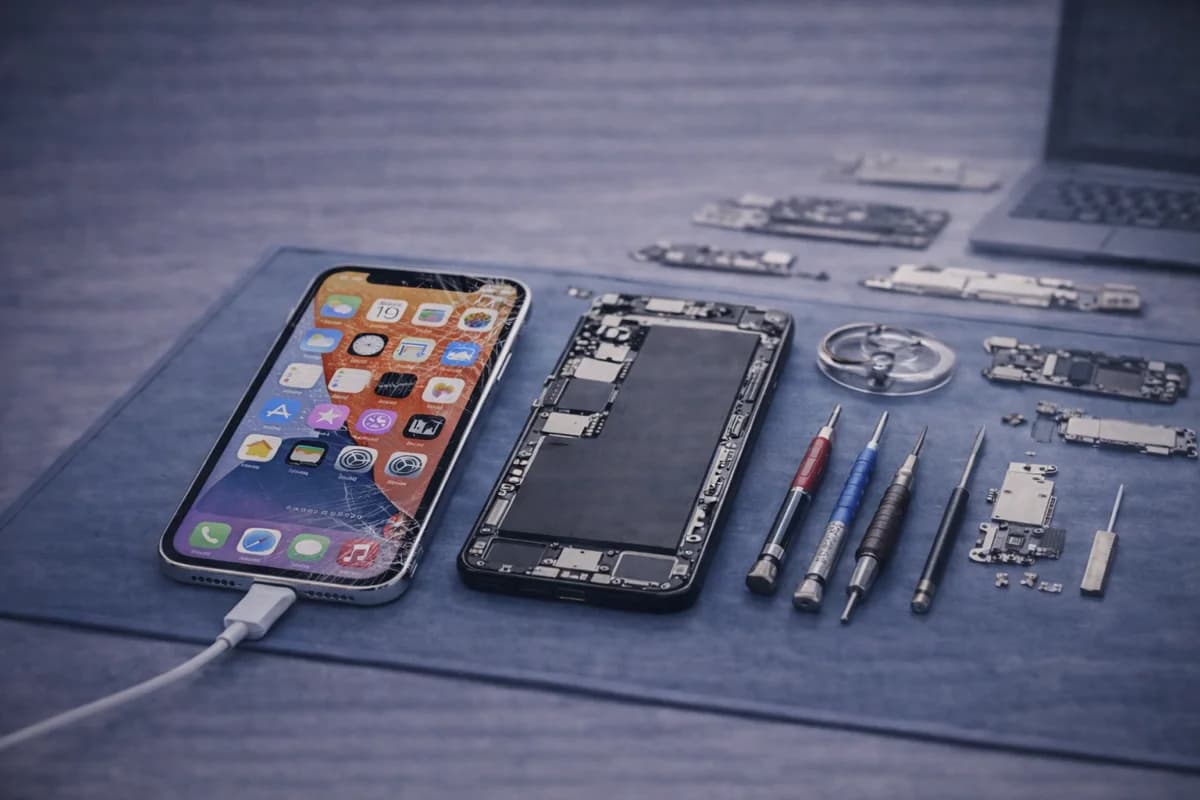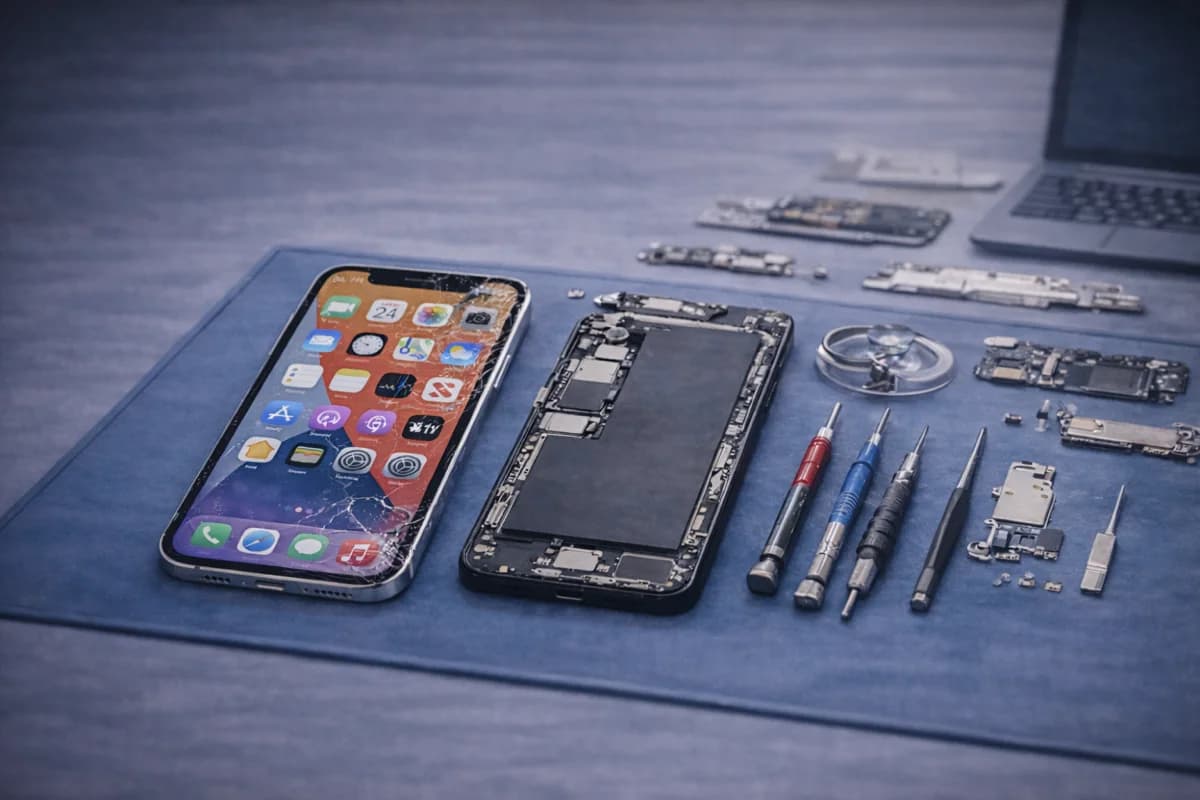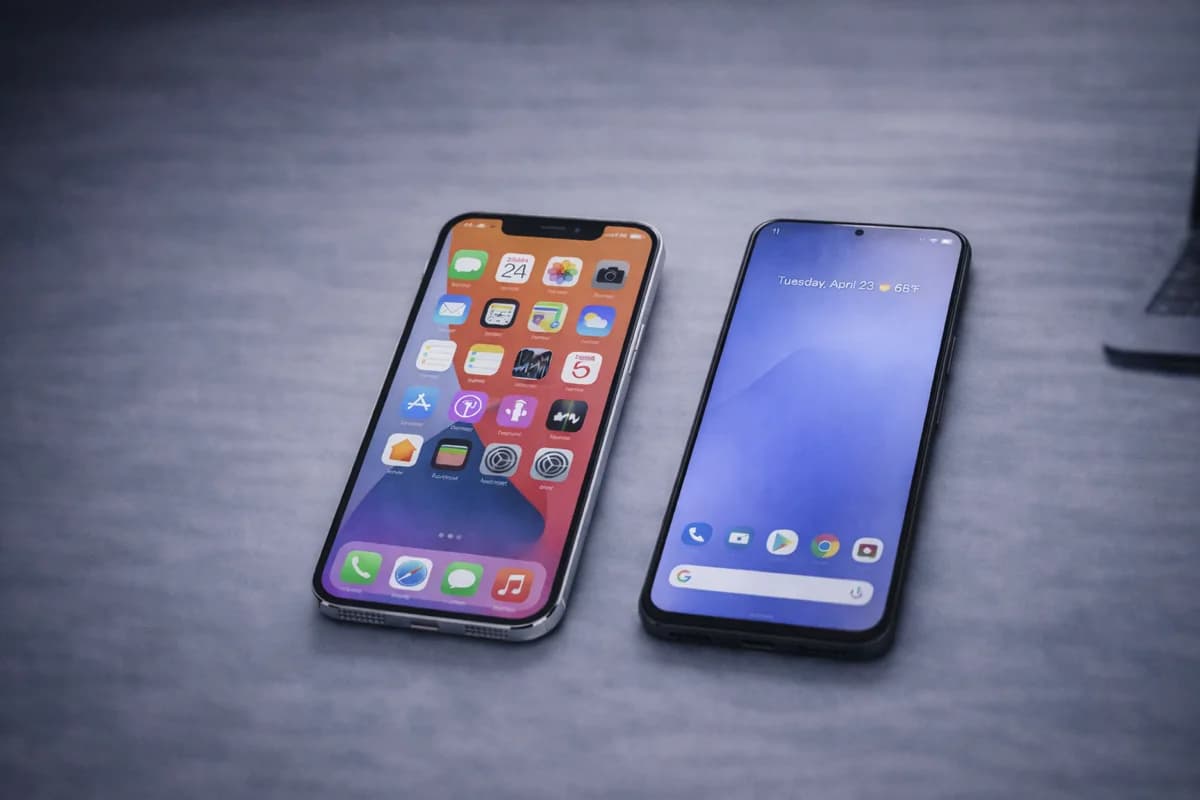
If you’ve ever compared a repair quote for an iPhone vs a Samsung (or another Android), you’ve probably noticed the pricing and turnaround can feel very different. That’s not random — it comes down to parts availability, design choices, and how each brand handles security and repair pairing.
Below is the real-world breakdown we give customers so you can understand what matters, what doesn’t, and how to choose a shop without getting burned.
Quick answer: is iPhone repair “harder” than Android?
Sometimes yes, sometimes no. iPhones can be more strict about parts + calibration and may require more careful procedures. Android repairs vary wildly depending on the manufacturer and model — some are easy, some are worse than iPhones.
1) Parts availability and screen quality
The biggest difference customers feel is screen and part quality options. For iPhones, there are typically multiple screen tiers (OEM-style, premium aftermarket, budget). For Android — especially models with AMOLED displays — screens can be more expensive and sometimes harder to source quickly.
What this means for you
- iPhone: more consistent availability across common models.
- Android: pricing and availability can change a lot by model (Galaxy S/Ultra screens can be pricey).
- Always ask: what screen tier are you installing, and is there a warranty?
2) Repair difficulty depends on the model — not just the brand
People say “Android is easier” because many older Android phones were modular. But modern phones (both iPhone and Android) are sealed, glued, and packed tight.
- Back glass repairs: can be tough on both (often heat + careful removal).
- Charging ports: can be complex depending on the device’s internal layout.
- Battery swaps: usually straightforward, but adhesive and flex cables still matter.
3) Security, pairing, and “non-genuine part” warnings
Modern phones care about security and part verification. Some components can trigger warnings if they’re replaced without proper calibration or pairing steps.
This doesn’t automatically mean a repair is “bad,” but it does mean the technician needs to be careful and transparent about expectations.
What to ask the shop
- Will anything show a part notification after repair?
- Do you test True Tone / Face ID / front sensors (when applicable)?
- Do you run a full post-repair checklist?
4) Warranty and service quality
A warranty matters more than brand arguments. The real question is: will the shop stand behind the repair?
- Look for written warranty terms (even a simple policy page).
- Ask what the warranty covers (screen defects, touch issues, part failure).
- Understand exclusions (liquid damage, physical damage after repair, etc.).
5) Cost: why iPhone and Android quotes can be so different
Customers often assume iPhones must be more expensive to fix. Not always. Many Android flagships (especially AMOLED screens) can cost more than common iPhone screens.
Cost usually comes down to:
- Part cost (display type + availability)
- Labor difficulty (model-specific layout)
- Risk (fragility, adhesives, back glass)
- Testing time and warranty coverage
How to choose the right repair shop (iPhone or Android)
This checklist works for both:
- ✅ They explain part quality options clearly (not vague “premium” talk).
- ✅ They offer a warranty and don’t dodge questions.
- ✅ They do a post-repair test (touch, cameras, speakers, charging, biometrics where relevant).
- ✅ They don’t pressure you with weird scare tactics (“it’ll die tomorrow if you don’t…”).
Need a repair in Houston?
If you want a fast quote without guessing, use our pricing tool. Pick your device + model + issue and you’ll get a clear estimate.
Get iPhone PriceGet Samsung PriceCall (346) 808-0948
FAQ
Can I repair my iPhone at an independent shop?
Yes. Just make sure they’re clear about part quality options, warranty, and expected behavior after repair (like any notifications or feature changes).
Are Android phones easier to repair?
It depends on the model. Some Android phones are easier, others are harder than iPhones. Modern sealed designs make both complex.
Should I use the cheapest parts available?
Not usually. Cheaper parts can mean weaker glass, worse colors/brightness, touch issues, or shorter lifespan. A good shop will explain the tradeoffs.